Super and
Futre Cars
· 2025
Bugatti Aerolithe Concept:-


The 2025 Bugatti Aerolithe Concept is the work of
Douglas Hogg, a Coventry graduate. The design draws its inspiration from the
original Bugatti Aerolithe concept showcased at the 1935 Paris Motorshow.
The old Bugatti Aerolithe concept was also the inspiration of the
Atlantic 57SC.
The Future in Mind
Designed 75 years after the original Aerolithe was launched in Paris, Douglas Hogg has introduced the modern interpretation of the design. The car looks quite futuristic, despite being based on a design that was made quarter of a century back. Hogg suggests that he has used a minimalistic approach in pure surfacing for the design and applied a principle of Ettore Bugatti for Automotive design.
The car design represents simplicity, elegance, and intelligence. The design follows a smooth flow, uncluttered by door handles, external mirrors or spoilers. It's in complete harmony with advanced aerodynamics.
The underbody aerodynamics are an important feature of the design that allows two air channels to traverse the entire length of the body, funneling air from the front of the body to the diffuser at the rear, producing enough down force in the process to keep the car glued to the tarmac at high speeds.
Features
Some of the key features of the design include aeronautics inspired split canopy doors, split windshield, pronounced windows, bullet proof windows, lightweight construction material and Bugatti's signature front grille.
Performance
The car is powered by a Microturbine-battery hybrid powertrain. Microturbines do not power the wheels directly and merely function as a generator to charge up the batteries on the run and acts as a range extender for an otherwise purely electric vehicle. A single fill of the tank can make this car run up to 800 miles.
The Bugatti Aerolithe design is a great concept that showcases the design elements that may inspire the cars of tomorrow. It's a great tribute to Ettore Bugatti, who was way ahead of his time when he launched the first Aerolithe.
The Future in Mind
Designed 75 years after the original Aerolithe was launched in Paris, Douglas Hogg has introduced the modern interpretation of the design. The car looks quite futuristic, despite being based on a design that was made quarter of a century back. Hogg suggests that he has used a minimalistic approach in pure surfacing for the design and applied a principle of Ettore Bugatti for Automotive design.
The car design represents simplicity, elegance, and intelligence. The design follows a smooth flow, uncluttered by door handles, external mirrors or spoilers. It's in complete harmony with advanced aerodynamics.
The underbody aerodynamics are an important feature of the design that allows two air channels to traverse the entire length of the body, funneling air from the front of the body to the diffuser at the rear, producing enough down force in the process to keep the car glued to the tarmac at high speeds.
Features
Some of the key features of the design include aeronautics inspired split canopy doors, split windshield, pronounced windows, bullet proof windows, lightweight construction material and Bugatti's signature front grille.
Performance
The car is powered by a Microturbine-battery hybrid powertrain. Microturbines do not power the wheels directly and merely function as a generator to charge up the batteries on the run and acts as a range extender for an otherwise purely electric vehicle. A single fill of the tank can make this car run up to 800 miles.
The Bugatti Aerolithe design is a great concept that showcases the design elements that may inspire the cars of tomorrow. It's a great tribute to Ettore Bugatti, who was way ahead of his time when he launched the first Aerolithe.
Specifications
General
Info
|
||||||||
Vehicle Type: Super
Sport Coupe
|
Est. Market Price: £ 900,000.00
|
|||||||
Performance
|
|
Engine: Micro
Turbine/Electric Hybrid
|
Electric Horsepower: 450 HP
|
Torque: 1500 lb-ft
|
Curb Weight: 3000
lbs (1361 kg)
|
0-60 mph: 2.7
seconds
|
Top Speed: 220
mph / 354 km/h
|
Engine: Micro
Turbine/Electric Hybrid
|
Electric Horsepower: 450 HP
|
Torque: 1500 lb-ft
|
Curb
Weight: 3000
lbs (1361 kg)
|
0-60 mph:
|
|
· FASTEST
CARS of the world :-
While most of us can only dream of owning the fastest car in
the world, some will do whatever it takes to possess the most powerful speed.
So, how fast are the fastest cars in the world?
Here are the 10 fastest street legal cars available on the market
(production models, as opposed to concept or modified cars) measured by tested
top speed (theoretical speeds do not count).
World's Fastest Cars:
1. Bugatti Veyron Super Sport: 267 mph, 0-60 in 2.4 secs.
Aluminum, Narrow Angle 8 Liter W16 Engine with 1200 hp, base price is
$2,400,000. Although the Bugatti Veyron lost the title to SSC Ultimate Aero on
March 2007, Bugatti challenge the record in Germany on July 10, 2010 with the
new 2010 Super Sport Version and the Veyron once again claims the title of the
fastest car in the world at 267 mph. The original Bugatti Veyron has a top
speed of 253 mph, priced at $1,700,000 and equipped with 1001 hp.

#2 is a tie at 260 mph!
2. Hennessey Venom GT: 260 mph, 0-60 in 2.5 seconds, has a 6.2-liter LS9 Turbocharged V8 Twin Turbo V8 Engine producing 1200 hp, has a price tag of $950,000. The Venom GT has yet to be tested and proven, but could possibly hit a top speed of 275 mph. This might just be t
he Veyron Super Sport's closest competitor!

 2. Koenigsegg Agera R: 260
mph, 0-60 in 2.9 secs. 5.0-liter V8 Engine with twin turbo’s, housing 1099
hp. Base price is $1,600,000. If you're into snow sports, the Agera R can be
fitted with a Ski Box as well as winter tires, not that I would take one on a
ski trip or anything like that. While the Agera R has a massive theoretical top
speed, the current tested top speed is 260 mph. Expect this snow car to be the
Bugatti's arch enemy for the next 5 years.
2. Koenigsegg Agera R: 260
mph, 0-60 in 2.9 secs. 5.0-liter V8 Engine with twin turbo’s, housing 1099
hp. Base price is $1,600,000. If you're into snow sports, the Agera R can be
fitted with a Ski Box as well as winter tires, not that I would take one on a
ski trip or anything like that. While the Agera R has a massive theoretical top
speed, the current tested top speed is 260 mph. Expect this snow car to be the
Bugatti's arch enemy for the next 5 years.
Also a tie for #3.
3. SSC Ultimate Aero: 257 mph, 0-60 in 2.7 secs. Twin-Turbo V8 Engine with 1183 hp, base price is $654,400. Tested in March 2007 by Guinness World Records, The SSC Ultimate Aero was the fastest car in the world from March 2007 to July 2010. On March 2011, the Koenigsegg Agera R also surpassed it, forcing this American made car to the #3 spot. Shelby SuperCars will continue their quest to reclaim the fastest car title, and their new SSC Tuatura might do the job (we'll just have to wait).

3. 9ff GT9-R: 257 mph, 0-60 in 2.9 secs. 4.0 Litre V6 Twin-Turbo Engine with 1120 hp, base price is $695,000. Based on the Porsche 911, the 9ff GT9-R 1120 hp version is limited to 20 units and the exterior may be modified to suit the owner.

4. Saleen S7 Twin-Turbo: 248 mph, 0-60 in 2.8 secs. Twin Turbo All Aluminum V8 Engine with 750 hp, base price is $555,000. Smooth and bad-ass. It will make you want to show it off non-stop.

5. Koenigsegg CCX: 245 mph, 0-60 in 3.2 secs. 90 Degree V8 Engine 806 hp, base price is $545,568. Made in Sweden, it is the older brother of the Agera R, only losing to 4 other supercars in the world.


6. McLaren F1: 240 mph, 0-60 in 3.2 secs. BMW S70/2 60 Degree V12 Engine with 627 hp, base price is $970,000. The fastest car in the 20th century with doors that looks like bat wings. Maybe Batman needs to order one and paint it black
7. Zenvo ST1: 233 mph, 0-60 in 2.9 secs. Twin-Charged 7.0 liter V8 Engine forging 1,104 hp. Base price: $1,225,000. The first Supercar from Zenvo Automotive, a Danish sports car company in pursuit of speed and perfection. This 100% Danish made supercar is limited to 15 units and the company even promised "flying doctors" to keep your baby functioning.

There is a tie for 8th place at 225 mph.
8. Gumpert Apollo: 225 mph, 0-60 in 3.0 secs, 4.2 liter V8 Engine that houses 650 hp. Base price: $450,000. Gumpert claims that the Apollo was designed such that it could drive upside-down in a tunnel with speeds at 190 mph or above. Of course, no one has tested this yet.
8. Noble M600: 225 mph, 0-60 in 3.7 secs. Twin-turbocharged 4.4-liter V8 Engine with 650 hp. Base price is $330,000. The Noble M600 also happens to be a very cool car. Its inconspicuous design sports a slender and contoured body which does not scream out for attention at every second of the day.
There is a 3-way tie for #9!
9. Aston Martin One-77: 220 mph, 0-60 in 3.4 secs. 7.3 litre V12 Engine with 750 hp. Base price: $1,850,000. The production of this is limited to 77, hence the name One-77. This is beauty and power packed into One.

9. Ascari A10: 220 mph, 0-60 in 2.8 secs. 5.0 litre BMW V8 S62 Engine with 625 hp. Base price: $650,000. The company planned to produce 50 of these supercars at its factory in Banbury, England.
9. Lamborghini Aventador: 220 mph, 0-60 in 2.9 secs. V12 Engine with 700 hp, base price is $379,700. According to Lamborghini, Aventador is the name of a Bull that entered into battle at the Saragossa Arena on October 1993. This is the fastest bull in the world!

We have another 3-way a tie for 10th place:
10. Pagani Zonda Cinque Roadster: 217 mph, 0-60 in 3.4 secs. Twin turbocharged AMG V12 engine that produces 678 hp. Base price is $1,850,000. The Pagani Zonda Cinque Roadster is a limited-edition, with five ever produced. It is the quintessential exotic and exclusive supercar.
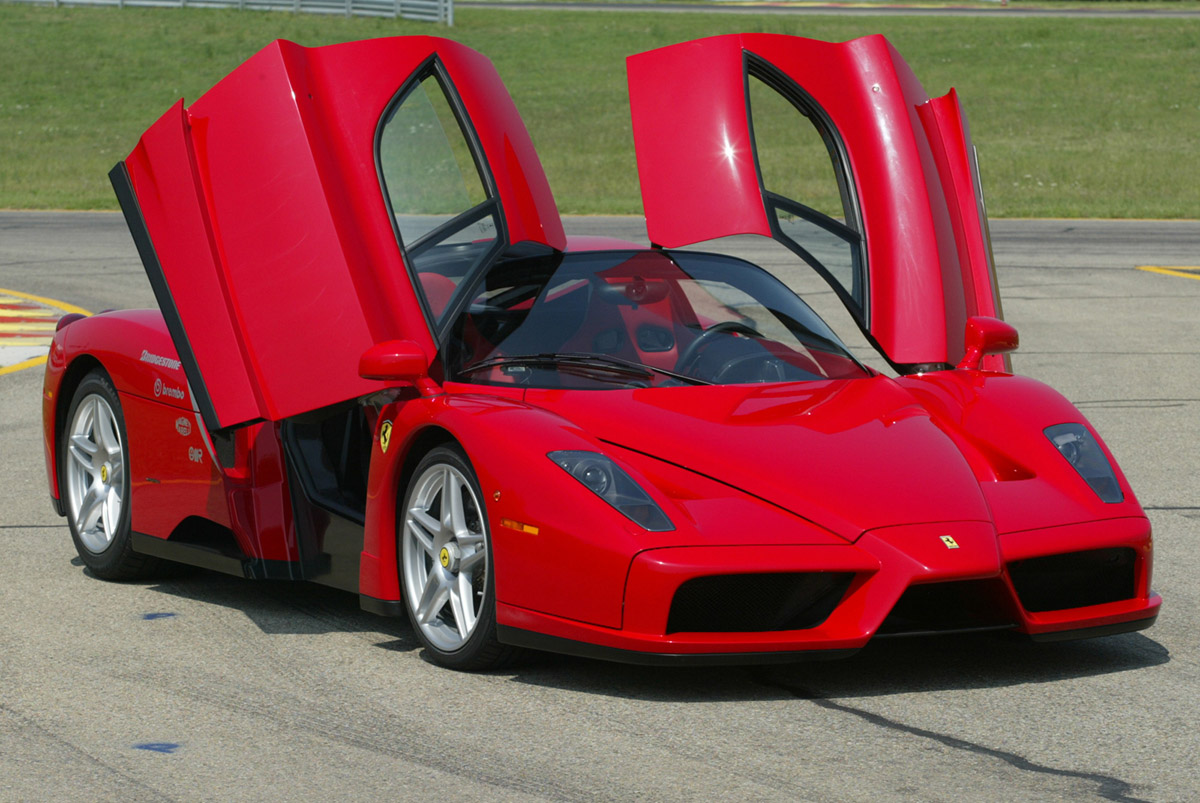
10. Ferrari Enzo: 217 mph, 0-60 in 3.4 secs. F140 Aluminum V12 Engine with 660 hp, base price is $670,000. Only 399 were ever produced; the price goes up every time someone crashes.
10. Jaguar XJ220: 217 mph, 0-60 in 3.8 secs. Twin Turbo V6 Engine with 542 hp, base price was $650,000. Made in 1992, this car still has what it takes to make the list.

#2 is a tie at 260 mph!
2. Hennessey Venom GT: 260 mph, 0-60 in 2.5 seconds, has a 6.2-liter LS9 Turbocharged V8 Twin Turbo V8 Engine producing 1200 hp, has a price tag of $950,000. The Venom GT has yet to be tested and proven, but could possibly hit a top speed of 275 mph. This might just be t
he Veyron Super Sport's closest competitor!
2. Koenigsegg Agera R: 260
mph, 0-60 in 2.9 secs. 5.0-liter V8 Engine with twin turbo’s, housing 1099
hp. Base price is $1,600,000. If you're into snow sports, the Agera R can be
fitted with a Ski Box as well as winter tires, not that I would take one on a
ski trip or anything like that. While the Agera R has a massive theoretical top
speed, the current tested top speed is 260 mph. Expect this snow car to be the
Bugatti's arch enemy for the next 5 years.Also a tie for #3.
3. SSC Ultimate Aero: 257 mph, 0-60 in 2.7 secs. Twin-Turbo V8 Engine with 1183 hp, base price is $654,400. Tested in March 2007 by Guinness World Records, The SSC Ultimate Aero was the fastest car in the world from March 2007 to July 2010. On March 2011, the Koenigsegg Agera R also surpassed it, forcing this American made car to the #3 spot. Shelby SuperCars will continue their quest to reclaim the fastest car title, and their new SSC Tuatura might do the job (we'll just have to wait).
3. 9ff GT9-R: 257 mph, 0-60 in 2.9 secs. 4.0 Litre V6 Twin-Turbo Engine with 1120 hp, base price is $695,000. Based on the Porsche 911, the 9ff GT9-R 1120 hp version is limited to 20 units and the exterior may be modified to suit the owner.
4. Saleen S7 Twin-Turbo: 248 mph, 0-60 in 2.8 secs. Twin Turbo All Aluminum V8 Engine with 750 hp, base price is $555,000. Smooth and bad-ass. It will make you want to show it off non-stop.
5. Koenigsegg CCX: 245 mph, 0-60 in 3.2 secs. 90 Degree V8 Engine 806 hp, base price is $545,568. Made in Sweden, it is the older brother of the Agera R, only losing to 4 other supercars in the world.
6. McLaren F1: 240 mph, 0-60 in 3.2 secs. BMW S70/2 60 Degree V12 Engine with 627 hp, base price is $970,000. The fastest car in the 20th century with doors that looks like bat wings. Maybe Batman needs to order one and paint it black
7. Zenvo ST1: 233 mph, 0-60 in 2.9 secs. Twin-Charged 7.0 liter V8 Engine forging 1,104 hp. Base price: $1,225,000. The first Supercar from Zenvo Automotive, a Danish sports car company in pursuit of speed and perfection. This 100% Danish made supercar is limited to 15 units and the company even promised "flying doctors" to keep your baby functioning.
There is a tie for 8th place at 225 mph.
8. Gumpert Apollo: 225 mph, 0-60 in 3.0 secs, 4.2 liter V8 Engine that houses 650 hp. Base price: $450,000. Gumpert claims that the Apollo was designed such that it could drive upside-down in a tunnel with speeds at 190 mph or above. Of course, no one has tested this yet.
8. Noble M600: 225 mph, 0-60 in 3.7 secs. Twin-turbocharged 4.4-liter V8 Engine with 650 hp. Base price is $330,000. The Noble M600 also happens to be a very cool car. Its inconspicuous design sports a slender and contoured body which does not scream out for attention at every second of the day.
There is a 3-way tie for #9!
9. Aston Martin One-77: 220 mph, 0-60 in 3.4 secs. 7.3 litre V12 Engine with 750 hp. Base price: $1,850,000. The production of this is limited to 77, hence the name One-77. This is beauty and power packed into One.
9. Ascari A10: 220 mph, 0-60 in 2.8 secs. 5.0 litre BMW V8 S62 Engine with 625 hp. Base price: $650,000. The company planned to produce 50 of these supercars at its factory in Banbury, England.
9. Lamborghini Aventador: 220 mph, 0-60 in 2.9 secs. V12 Engine with 700 hp, base price is $379,700. According to Lamborghini, Aventador is the name of a Bull that entered into battle at the Saragossa Arena on October 1993. This is the fastest bull in the world!
We have another 3-way a tie for 10th place:
10. Pagani Zonda Cinque Roadster: 217 mph, 0-60 in 3.4 secs. Twin turbocharged AMG V12 engine that produces 678 hp. Base price is $1,850,000. The Pagani Zonda Cinque Roadster is a limited-edition, with five ever produced. It is the quintessential exotic and exclusive supercar.
10. Ferrari Enzo: 217 mph, 0-60 in 3.4 secs. F140 Aluminum V12 Engine with 660 hp, base price is $670,000. Only 399 were ever produced; the price goes up every time someone crashes.
10. Jaguar XJ220: 217 mph, 0-60 in 3.8 secs. Twin Turbo V6 Engine with 542 hp, base price was $650,000. Made in 1992, this car still has what it takes to make the list.
·
Top 10 Coolest Cars:-
Anybody should want to drive a cool car. But what makes a car cool? A cool car is one that should raise your coolness quotient. It should be a car that people don’t see all the time. It’s not the car that the stereotypical soccer mom drives that is full of rug rats in the backseats, nor is it one that is chromed out and loaded with flashy rocket boosters.
A cool car is the car that you might take your new crush out on a date in. It’s the car that turns heads and makes you the center of all your friends. Ultimately though, it’s the kind of car that steals your thunder. In a sense, a cool car should have sex appeal. A cool car is very self-satisfied, not caring about what others think. It is precisely this kind of coolness which is uniquely beautiful and magnificent. A cool car should manage magnificence in an effortless manner.
The Top 10 Coolest Cars with Pictures:
1. Ferrari FF
0-60 mph: 3.7 seconds. 660 hp. Cost: $700,000.
Drive carefully. This is a supercar on ice. You can’t get cooler than this. This is the car that you want to be the first guy driving, not the second. Imagine driving across a snow bank in the Alps with the fresh, icy wind in your face. I would trade anything and everything (not really) for this all-wheel-drive Ferrari. I’m going to say that this car doesn’t even look perfectly beautiful. In fact, that is why I love it: it doesn’t really care what you think and still give you the kind of performance only experienced by kings. Heck, it will mock every idea you had about what makes a car powerful. P.S. The computer system on the FF can vector its torque and braking pressure depending on tire grip conditions. AWESOME for driving to your winter home in Aspen.


2. Spyker C12 Zagato
0-60 mph: 3.8 seconds. 500-650 horsepower. Cost: $648,000.
The C12 Zagato was designed with F1 styles into its highly ornate body. The Zagato is powered by an engine with 500bhp and can go up to 650bhp with a supercharger. It is a mad house. Despite being priced at $648,000, its raw coolness quotient comes from unmatched aesthetics and power. The C12 Zagato is a cool car fit with skill, beauty, and passion. It is the car you want to take your lover or spouse out on a date with.


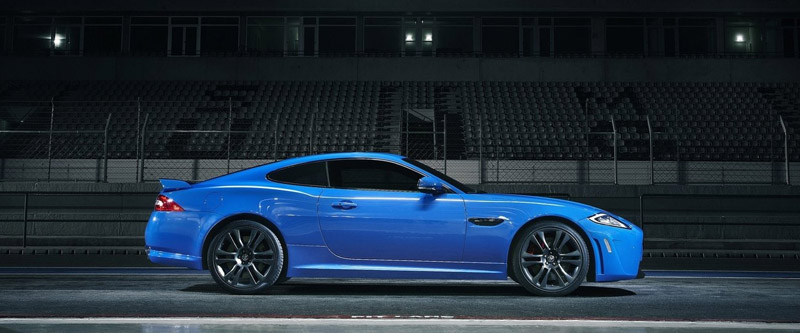
3. Jaguar XKR-S
0-60 mph: 4.2 seconds. 550 horsepower. Cost: $132,000.
At first the XKR-S does not look like much with its inconspicuous style. But seeing it in action can make it grow on you. The styling of the XKR-S was never about looks: it’s all about performance. This car pounces like a beast with an AJ V8 power-plant fitted with a twin-vortex Roots supercharger that altogether pack 550 hp, 0-60mph in 4.2 seconds, and a top speed of 186 mph. Did I mention that this car comes only in Italian racing red and French racing blue? That’s all you need really. The architecture of the XKR-S is all about perfect geometry and aerodynamics—it doesn’t get much cooler than that. Expect to drop $132,000 for this beast.


4. Audi R8
0-60 mph: 3.6 seconds. 525 horsepower. Cost: $114,200.
The Audi R8 sports 525 womping horses that wail at 8700 RPMs. The body styling is very stealthy and doesn’t scream “look at me!” yet turns as many, if not more, heads and plenty of stares and possibly picture-snapping, too. The pricing is steep at $114,200, although you do get what you pay with this car.


5. Aston Martin One-77
0-60 mph: 3.4 seconds. 750 horsepower. Cost: $1,850,000.
Aston Martin was named the coolest car company in the U.K. It is the brand of choice for James Bond. And what I’m going to say is the One-77 is the coolest Aston Martin. Its style is of excellent workmanship that bleeds cool. The One-77 will do 0-60 in less than 3.5 seconds with top speeds higher than 200 mph. Depending on when you are reading this, the price of the One-77 can be at least $1.85 million.


6. Pagani Huayra
0-60 mph: 3.0 seconds. 700 horsepower. Cost: $1,300,000.
This car lacks all that is old world charm. While it can be a bit too flashy to actually be supercool, it is still a new kind of beauty, with a radical design and awesome performance. This Pagani can hit 0-60 in three seconds, with a top speed of 220. It will be in the market at $1.3 million dollars, not all of us will be able to afford one. Ultimately, its novelty and uniqueness makes it the new kid that everyone wants to meet.


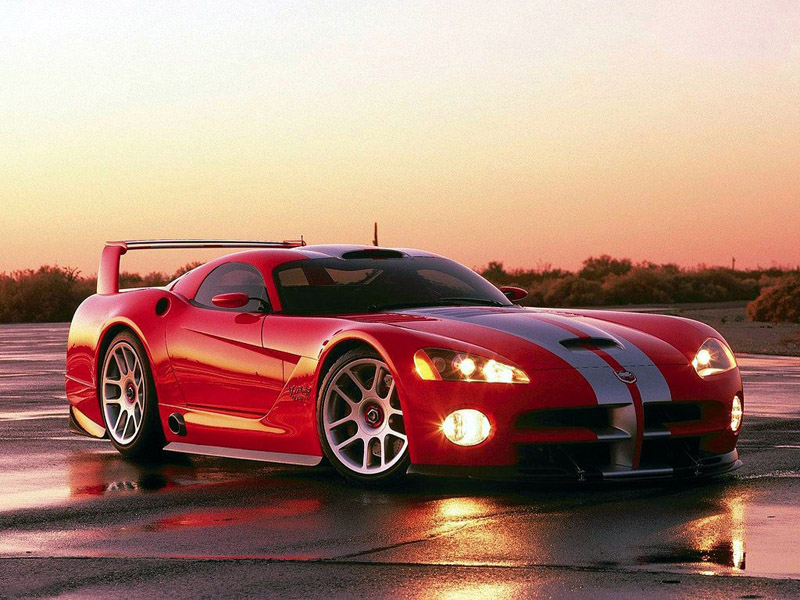
7. Dodge Viper
0-60 mph: 3.6 seconds. 600 horsepower. Cost: $92,705.
A classic American muscle car. This was the car to have if you wanted to be cool. This car was never one that was based on anything else. It is very self-satisfied. It can do 0-60 in 3.4 seconds with a topspeed of 202 mph. What is special about the Viper is that it is never about comfort or luxury. Most cars in its price range around $92,000 cannot compete with it.


8. Chevrolet Corvette
0-60 mph: 3.4-4.2 seconds. 430-638 horsepower. Cost: $49,000-$111,000.
Another classic American icon. It is the everyday supercar. In comparison to the Viper, I think the Corvette packs more power and style for the buck. A Corvette will cost anywhere between $49,000 and $111,000.


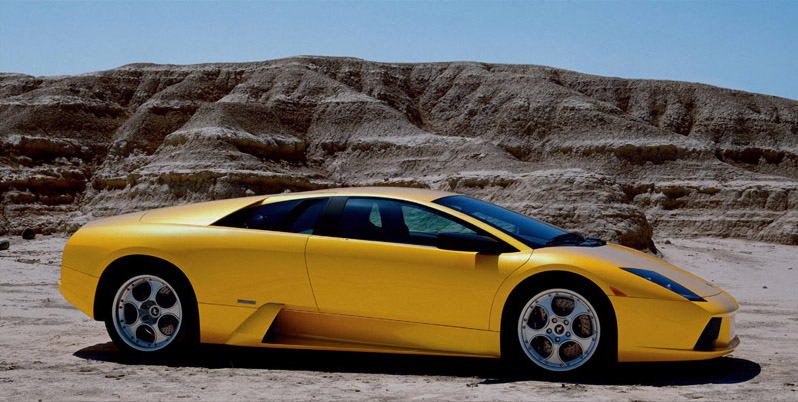
9. Lamborghini Murcielago
0-60 mph: 3.3 seconds. 661 horsepower. Cost: $330,000 - 455,000.
The flagship supercar of Lamborghini. It is made as the most popular car posters, hung on the walls of many young people. This car was named after a fighting bull that best 28 sword strokes. The beastly name leaves a legacy for this car that makes anyone who owns it supercool. The Murcielago costs between $360,000 and $455,000. It's a bit overplayed and try-hard, hence it sits at #9.


10. Ford Mustang
0-60 mph: 4.0-5.1 seconds. 305-650 horsepower. Cost: $22,000 - $53,000.
The most affordable sports car. This is the classic American cool car. The newest model sports 305 hp and 30 mpg. The Mustang is fun, fast, and gas efficient for a muscle car that can be had for $22,000 - $53,000.


· WORLD's
COOLEST CAR MAKING COMPANIES:-
What is an exotic car? It is rare beauty, a work of art, a
prestigious collectible. It is, in one sense, a car of uniquely new or experimental
nature. An exotic car is one that performs highly superbly compared to
contemporary sports cars. Exotic cars have a purely bestial design. To even
drive one of these would definitely change the way you think of cars.
The
following is a list of exotic cars & car makers. Sports cars don’t just
come straight off the production line. They oftentimes begin with a company’s
vision, its dreams. That is precisely what an exotic car is, the embodiment of
a dream.
1. Ferrari - the spirit of Ferrari began with Enzo Ferrari who was an advent racer. The foundation of Ferrari marked the start of a burst of a frenetic sporting activity. This spurred the creation of powerful, exotic cars that are characteristic of Ferrari today. Because the visions behind Ferrari were one of the first innovators of exotic supercars, it deserves #1 for Best Exotic Car Maker.


Pictures Above: Ferrari Enzo, Ferrari 599 GTB, Ferrari California, Ferrari 459 Italia, Ferrari 550 Barchetta Pininfarina, Ferrari F430 2.
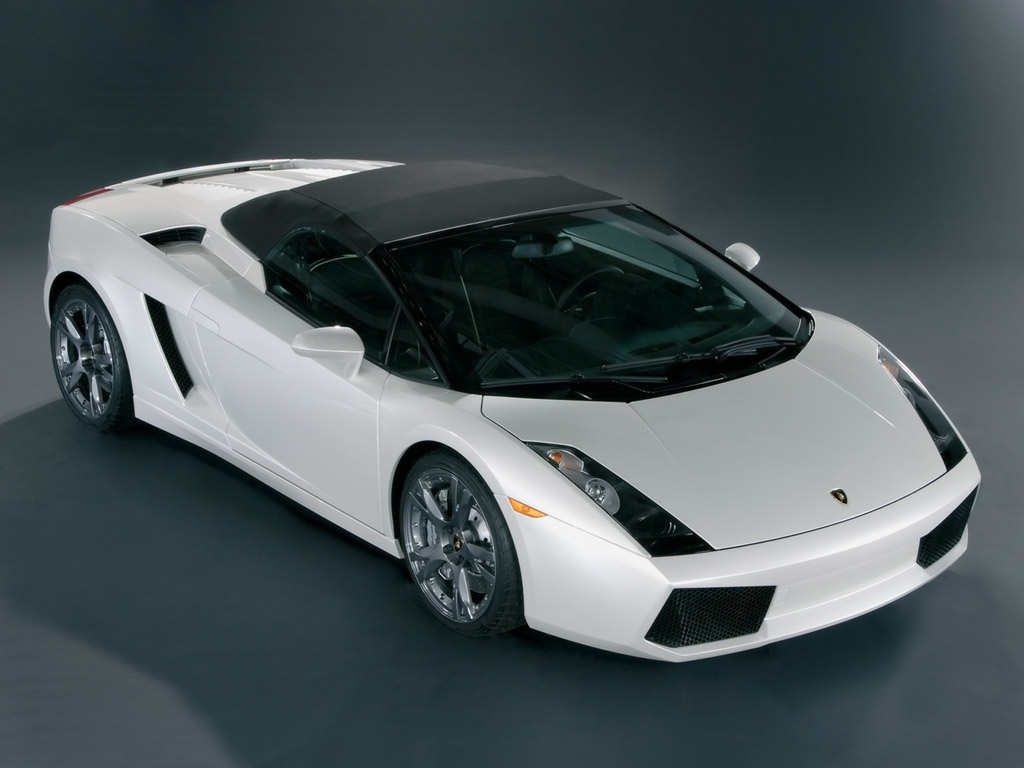
Lamborghini - the founder of Lamborghini made his name building farm
equipment. He owned a Ferrari but noticed that he had to keep replacing the
clutch. To his surprise, his own farm equipment clutches were better
replacements. Thus, the beginning of the rivalry between Ferrari and
Lamborghini was born. The spirit of competition spurred continual innovation
over the years, bringing ever-improved exotic cars every year. However, the
power of the original idea belongs to Ferrari. As #2, Lamborghini is only
behind Ferrari in the popularity of its innovations.
2.
Lamborghini - the founder of Lamborghini made his name building farm
equipment. He owned a Ferrari but noticed that he had to keep replacing the
clutch. To his surprise, his own farm equipment clutches were better
replacements. Thus, the beginning of the rivalry between Ferrari and
Lamborghini was born. The spirit of competition spurred continual innovation
over the years, bringing ever-improved exotic cars every year. However, the
power of the original idea belongs to Ferrari. As #2, Lamborghini is only
behind Ferrari in the popularity of its innovations.


Pictures Above: Lamborghini Reventon, Lamborghini Furia, Lamborghini Gallardo, Lamborghini Murcielago
3. Bugatti - a 21st century “harmony of design and technology.” The heritage of Ettore Bugatti is the heart of impressive technical design and exterior beauty. This can be seen in Bugatti’s signature supercar, the exotic Veyron. Ettore Bugatti sometimes made technical compromises for the sake of aesthetic integrity. This is a very gutsy vision of exotic cars, one which can only belong to the #3 contender.


Pictures Above: Bugatti Veyron Super Sport, Bugatti Veyron 16.4 Grand Sport
4. Pagani - Horacio Pagani originally teamed up with Lamborghini, doing composite research for them in 1988. The company was called “Pagani Composite Research.” In the late ‘80s Pagani wanted to start building his own car, which was coded as the “C8 Project.” The C8 would later be named the Fangio F1 in commemoration of the F1 champion, Juan Manuel Fangio. For its amazing designs, Pagani is the #4 Most Exotic Car Maker.


Pictures Above: Pagani Huayra, Pagani Zonda, Pagani Zonda Cinque Roadster, Pagani Zonda Roadster
 5. Aston
Martin - Lionel Martin and Robert Bamford found Aston Martin together
in 1913. They had been in Callow Street, London selling cars made by Singer
under the company name “Bamford & Martin.” After Martin raced cars at Aston
Hill, the pair decided to start making their own cars. With Aston Martin’s
eye-opening cars, it would be the #5 Most Exotic Car Maker.
5. Aston
Martin - Lionel Martin and Robert Bamford found Aston Martin together
in 1913. They had been in Callow Street, London selling cars made by Singer
under the company name “Bamford & Martin.” After Martin raced cars at Aston
Hill, the pair decided to start making their own cars. With Aston Martin’s
eye-opening cars, it would be the #5 Most Exotic Car Maker.


Pictures Above: Aston Martin DB9 Volante, Aston Martin DBS, Aston Martin V12 Zagato Race, Aston Martin V8 Vantage
 6.
Mclaren - The Mclaren heritage rests upon the legendary soul of Bruce
Mclaren, who was born in New Zealand in 1937 and passed away in 1970 while
testing one of his cars. A sickly child with Perthes Disease, Bruce Mclaren
went on to become a world class international motor racing driver, engineer and
designer whose name is still used in Formula 1 motor racing today. Bruce’s
success in the international racing scene was all about team work, and even
today his contributions are remembered. His spirit is reflected in the exotic
cars of Mclaren, which is the #6 Exotic Car Maker.
6.
Mclaren - The Mclaren heritage rests upon the legendary soul of Bruce
Mclaren, who was born in New Zealand in 1937 and passed away in 1970 while
testing one of his cars. A sickly child with Perthes Disease, Bruce Mclaren
went on to become a world class international motor racing driver, engineer and
designer whose name is still used in Formula 1 motor racing today. Bruce’s
success in the international racing scene was all about team work, and even
today his contributions are remembered. His spirit is reflected in the exotic
cars of Mclaren, which is the #6 Exotic Car Maker.


Pictures Above: McLaren F1, McLaren MP4-12C
 7.
Bentley - after a stint of making airplane engines in WWI, Bentley
went on to make exotic cars. This venture was short-lived as Bentley was bought
out by Rolls-Royce from 1930 to 1982. It was slowly revived as Volkswagen
bought Rolls-Royce and Bentley in 1998. VW invested nearly one-billion dollars
to get Bentley up and running again. From 2006 onwards Bentley became bent on
producing ever-faster exotic sedans. For its strong spirit of endurance,
Bentley is tied for #7.
7.
Bentley - after a stint of making airplane engines in WWI, Bentley
went on to make exotic cars. This venture was short-lived as Bentley was bought
out by Rolls-Royce from 1930 to 1982. It was slowly revived as Volkswagen
bought Rolls-Royce and Bentley in 1998. VW invested nearly one-billion dollars
to get Bentley up and running again. From 2006 onwards Bentley became bent on
producing ever-faster exotic sedans. For its strong spirit of endurance,
Bentley is tied for #7. 


Pictures Above: Bentley Continental GTC, Bentley Azure T, Bentley Arnage, Bentley Continental Flying Spur
 7. Rolls-Royce - the name derives from the surnames of the company founders,
Charles Rolls and Henry Royce. With a strong global engineering operation,
Rolls-Royce maintains a vision of setting new standards and creating the “best
car in the world.” With a strong heritage and work ethic, Rolls-Royce is tied
for the #7 Most Exotic Car Maker in the world.
7. Rolls-Royce - the name derives from the surnames of the company founders,
Charles Rolls and Henry Royce. With a strong global engineering operation,
Rolls-Royce maintains a vision of setting new standards and creating the “best
car in the world.” With a strong heritage and work ethic, Rolls-Royce is tied
for the #7 Most Exotic Car Maker in the world.

Pictures Above: Rolls-Royce Phantom Drophead, Rolls-Royce Phantom, Rolls-Royce Ghost
 8.
Maybach - Maybach holds a track record of manufacturing military
engines. However it did not see light after WWII. In 2003 the sleeping beauty
awoke with a new line of exotic cars, including the 57 and 62. With its
luxurious cars, Maybach sits at #8.
8.
Maybach - Maybach holds a track record of manufacturing military
engines. However it did not see light after WWII. In 2003 the sleeping beauty
awoke with a new line of exotic cars, including the 57 and 62. With its
luxurious cars, Maybach sits at #8.

Pictures Above: Maybach Exelero, Maybach 62, Maybach 57
9. Shelby SuperCars (SSC) - the vision of founder Jerod Shelby was to produce the perfect car. Growing up as a kart racer, his dream began at an early age and never ceased. Shelby not only wished to participate in the market but also to excel and redefine it. He learned that the key to winning was in the smaller details which fabricated a complete larger image. SSC gets #9 for Most Exotic Car Maker.


Pictures Above: SSC Ultimate Aero
10. Koenigsegg - this Swede exotic supercar maker thrived on the dream of Christian von Koenigsegg to make the perfect supercar. The company is rather young compared to other exotic car makers, having only launched in 1993. Its staff consists of a dedicated group of enthusiasts who had connections to the Swedish car industry and the universities. Koenigsegg is the #10 Most Exotic Car Maker.


Pictures Above: Koenigsegg CCX, Koenigsegg CCR, Koenigsegg Agera.
1. Ferrari - the spirit of Ferrari began with Enzo Ferrari who was an advent racer. The foundation of Ferrari marked the start of a burst of a frenetic sporting activity. This spurred the creation of powerful, exotic cars that are characteristic of Ferrari today. Because the visions behind Ferrari were one of the first innovators of exotic supercars, it deserves #1 for Best Exotic Car Maker.
Pictures Above: Ferrari Enzo, Ferrari 599 GTB, Ferrari California, Ferrari 459 Italia, Ferrari 550 Barchetta Pininfarina, Ferrari F430
 2.
Lamborghini - the founder of Lamborghini made his name building farm
equipment. He owned a Ferrari but noticed that he had to keep replacing the
clutch. To his surprise, his own farm equipment clutches were better
replacements. Thus, the beginning of the rivalry between Ferrari and
Lamborghini was born. The spirit of competition spurred continual innovation
over the years, bringing ever-improved exotic cars every year. However, the
power of the original idea belongs to Ferrari. As #2, Lamborghini is only
behind Ferrari in the popularity of its innovations.
2.
Lamborghini - the founder of Lamborghini made his name building farm
equipment. He owned a Ferrari but noticed that he had to keep replacing the
clutch. To his surprise, his own farm equipment clutches were better
replacements. Thus, the beginning of the rivalry between Ferrari and
Lamborghini was born. The spirit of competition spurred continual innovation
over the years, bringing ever-improved exotic cars every year. However, the
power of the original idea belongs to Ferrari. As #2, Lamborghini is only
behind Ferrari in the popularity of its innovations.Pictures Above: Lamborghini Reventon, Lamborghini Furia, Lamborghini Gallardo, Lamborghini Murcielago
3. Bugatti - a 21st century “harmony of design and technology.” The heritage of Ettore Bugatti is the heart of impressive technical design and exterior beauty. This can be seen in Bugatti’s signature supercar, the exotic Veyron. Ettore Bugatti sometimes made technical compromises for the sake of aesthetic integrity. This is a very gutsy vision of exotic cars, one which can only belong to the #3 contender.
Pictures Above: Bugatti Veyron Super Sport, Bugatti Veyron 16.4 Grand Sport
4. Pagani - Horacio Pagani originally teamed up with Lamborghini, doing composite research for them in 1988. The company was called “Pagani Composite Research.” In the late ‘80s Pagani wanted to start building his own car, which was coded as the “C8 Project.” The C8 would later be named the Fangio F1 in commemoration of the F1 champion, Juan Manuel Fangio. For its amazing designs, Pagani is the #4 Most Exotic Car Maker.
Pictures Above: Pagani Huayra, Pagani Zonda, Pagani Zonda Cinque Roadster, Pagani Zonda Roadster
5. Aston
Martin - Lionel Martin and Robert Bamford found Aston Martin together
in 1913. They had been in Callow Street, London selling cars made by Singer
under the company name “Bamford & Martin.” After Martin raced cars at Aston
Hill, the pair decided to start making their own cars. With Aston Martin’s
eye-opening cars, it would be the #5 Most Exotic Car Maker.Pictures Above: Aston Martin DB9 Volante, Aston Martin DBS, Aston Martin V12 Zagato Race, Aston Martin V8 Vantage
6.
Mclaren - The Mclaren heritage rests upon the legendary soul of Bruce
Mclaren, who was born in New Zealand in 1937 and passed away in 1970 while
testing one of his cars. A sickly child with Perthes Disease, Bruce Mclaren
went on to become a world class international motor racing driver, engineer and
designer whose name is still used in Formula 1 motor racing today. Bruce’s
success in the international racing scene was all about team work, and even
today his contributions are remembered. His spirit is reflected in the exotic
cars of Mclaren, which is the #6 Exotic Car Maker.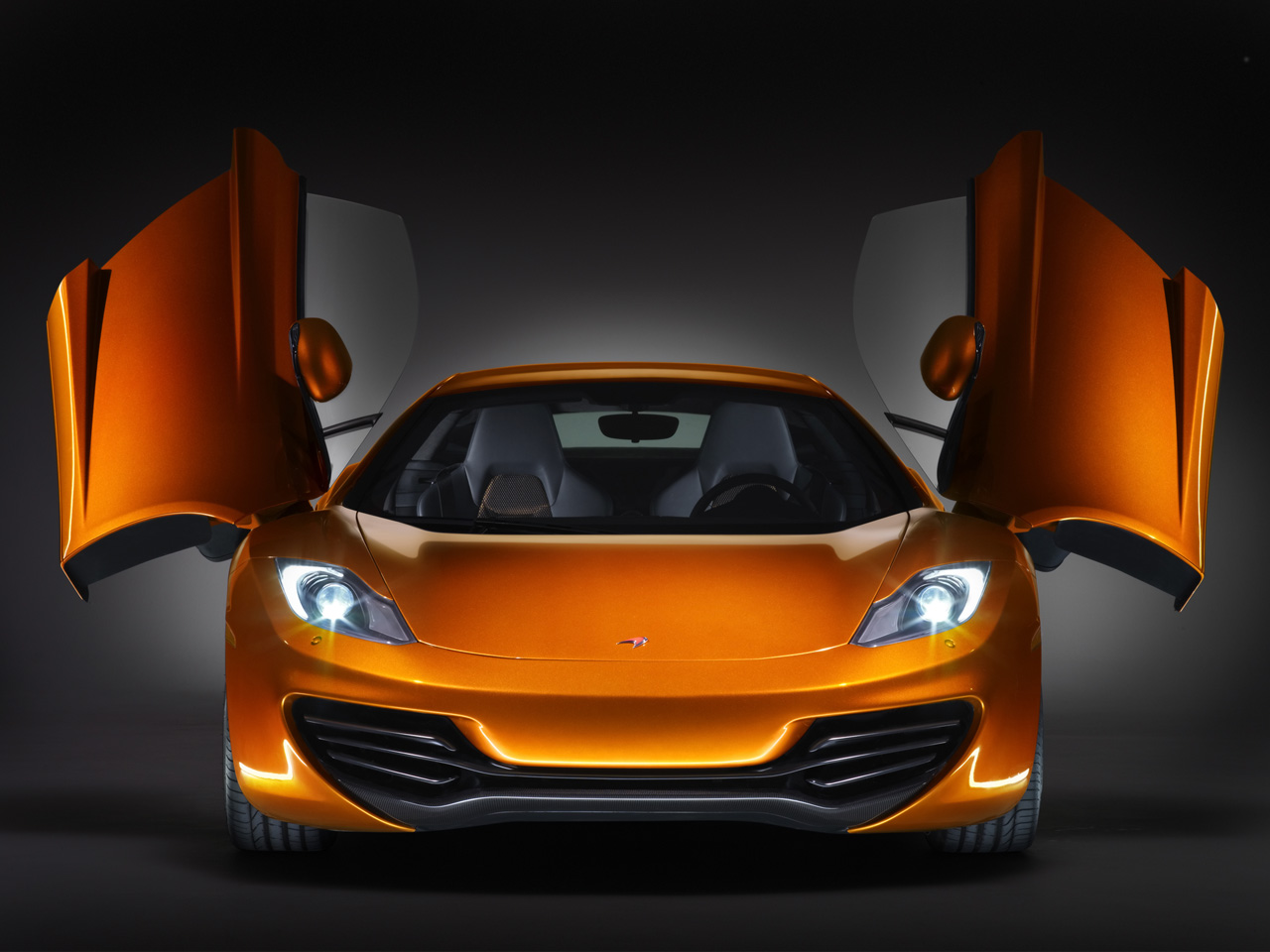
Pictures Above: McLaren F1, McLaren MP4-12C
7.
Bentley - after a stint of making airplane engines in WWI, Bentley
went on to make exotic cars. This venture was short-lived as Bentley was bought
out by Rolls-Royce from 1930 to 1982. It was slowly revived as Volkswagen
bought Rolls-Royce and Bentley in 1998. VW invested nearly one-billion dollars
to get Bentley up and running again. From 2006 onwards Bentley became bent on
producing ever-faster exotic sedans. For its strong spirit of endurance,
Bentley is tied for #7. Pictures Above: Bentley Continental GTC, Bentley Azure T, Bentley Arnage, Bentley Continental Flying Spur
7. Rolls-Royce - the name derives from the surnames of the company founders,
Charles Rolls and Henry Royce. With a strong global engineering operation,
Rolls-Royce maintains a vision of setting new standards and creating the “best
car in the world.” With a strong heritage and work ethic, Rolls-Royce is tied
for the #7 Most Exotic Car Maker in the world.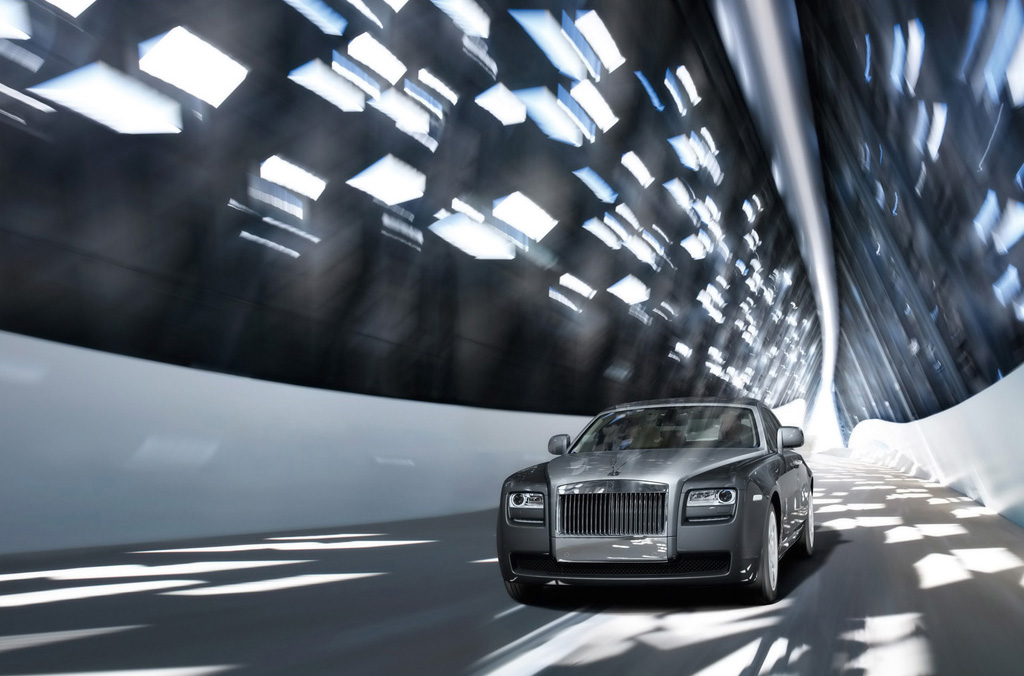
Pictures Above: Rolls-Royce Phantom Drophead, Rolls-Royce Phantom, Rolls-Royce Ghost
8.
Maybach - Maybach holds a track record of manufacturing military
engines. However it did not see light after WWII. In 2003 the sleeping beauty
awoke with a new line of exotic cars, including the 57 and 62. With its
luxurious cars, Maybach sits at #8.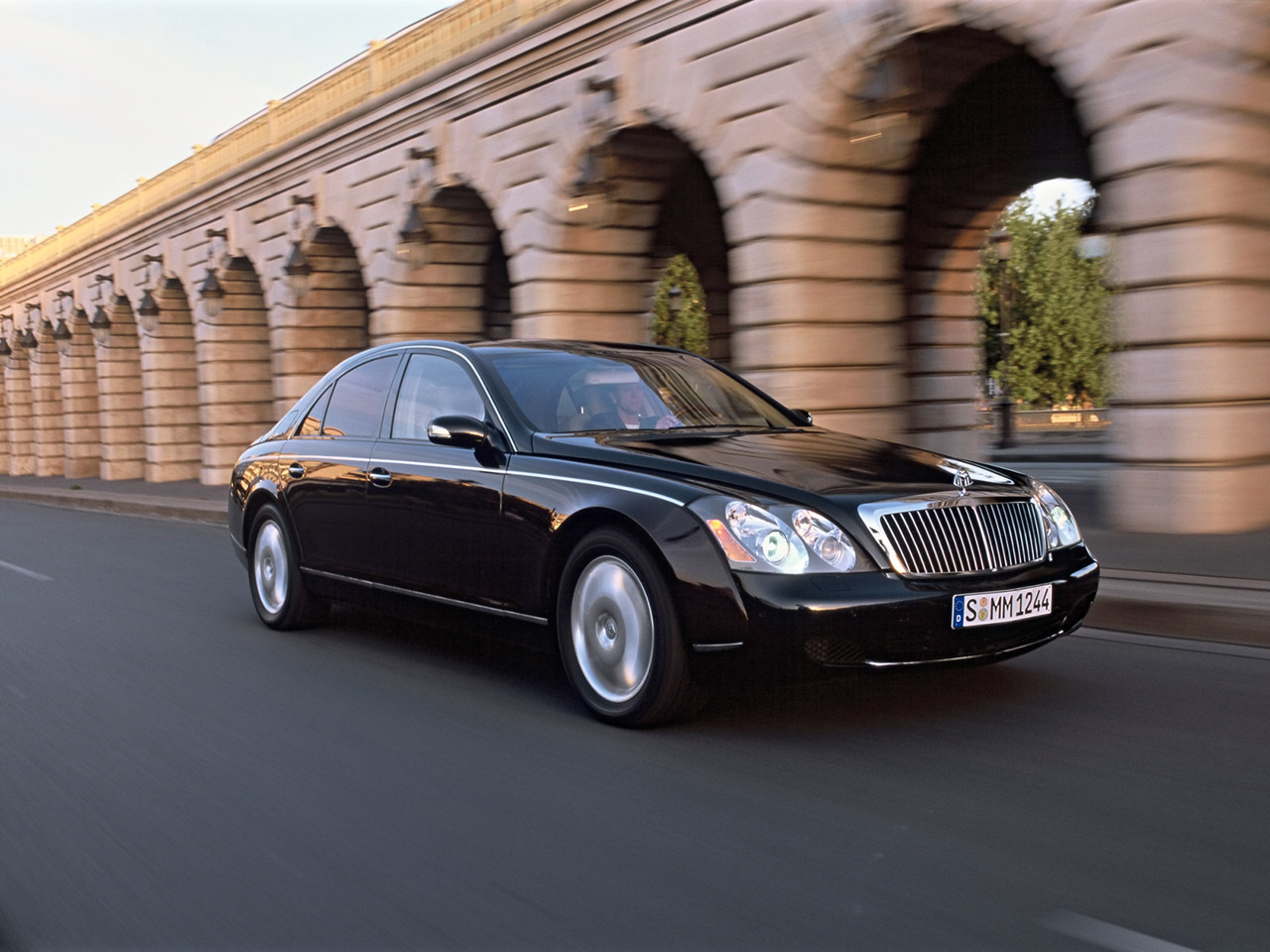
Pictures Above: Maybach Exelero, Maybach 62, Maybach 57
9. Shelby SuperCars (SSC) - the vision of founder Jerod Shelby was to produce the perfect car. Growing up as a kart racer, his dream began at an early age and never ceased. Shelby not only wished to participate in the market but also to excel and redefine it. He learned that the key to winning was in the smaller details which fabricated a complete larger image. SSC gets #9 for Most Exotic Car Maker.
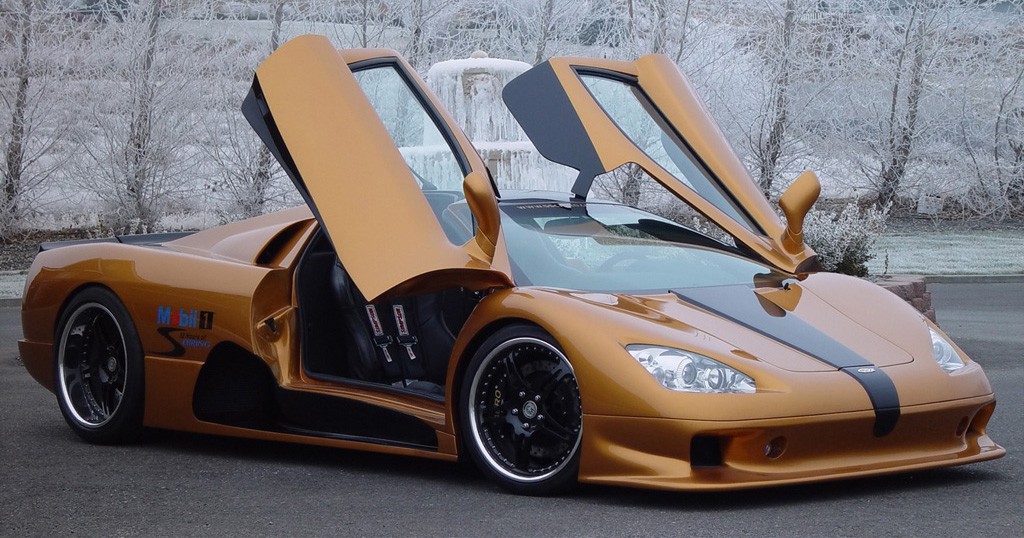
Pictures Above: SSC Ultimate Aero
10. Koenigsegg - this Swede exotic supercar maker thrived on the dream of Christian von Koenigsegg to make the perfect supercar. The company is rather young compared to other exotic car makers, having only launched in 1993. Its staff consists of a dedicated group of enthusiasts who had connections to the Swedish car industry and the universities. Koenigsegg is the #10 Most Exotic Car Maker.
Pictures Above: Koenigsegg CCX, Koenigsegg CCR, Koenigsegg Agera.

· LATEST
CARS:-
2010 Audi A9 Concept Design
Audi has just released its latest concept design. It is known as
the A9 concept and it is unlike anything we have seen in any production car to
date. Audi plans to project its A9 concept at a higher standing than its
current top dog, the A8. Audi predicts that this concept will be advanced
enough to overwhelm first-class luxury models from competitors such as the
Porsche Panamera, and the Lamborghini Estoque if ever it will be put into
production. The form and features of the 2010 Audi A9 Concept were motivated in part by the
magnificent structural design of Santiago Calatrava’s architecture in The City
of Arts and Sciences located in Valencia. Such inspiration can be seen in the
smooth, sleek and flowing contours of the vehicle along with its futuristic
structure. Calatrava’s constructions seem as if they were taken from centuries
in the future, and Audi’s concept emulates the same ideals.
The form and features of the 2010 Audi A9 Concept were motivated in part by the
magnificent structural design of Santiago Calatrava’s architecture in The City
of Arts and Sciences located in Valencia. Such inspiration can be seen in the
smooth, sleek and flowing contours of the vehicle along with its futuristic
structure. Calatrava’s constructions seem as if they were taken from centuries
in the future, and Audi’s concept emulates the same ideals.
The windshield of this concept car is fully integrated into the roof, and is composed of material using nanotechnology. Note that this technology does not exist at this time, since it is designed to automatically adjust from clear to opaque, change color and repair damage. Changing colors to the preference of the driver is a feature also reserved for the body kit of the A9. This means that at the touch of a button, the car can change from white to black, to red, to blue, etc. Propulsion for the A9 concept is achieved via a sophisticated fusion between
electric-powered motors found in each of the four wheels of the vehicle,
working in concurrence with an internal combustion engine using a renewable
source of fuel. Once again, such technology does not exist as of yet, but the
plans for this vehicle certainly sound fascinating.
Propulsion for the A9 concept is achieved via a sophisticated fusion between
electric-powered motors found in each of the four wheels of the vehicle,
working in concurrence with an internal combustion engine using a renewable
source of fuel. Once again, such technology does not exist as of yet, but the
plans for this vehicle certainly sound fascinating.
The form and features of the 2010 Audi A9 Concept were motivated in part by the
magnificent structural design of Santiago Calatrava’s architecture in The City
of Arts and Sciences located in Valencia. Such inspiration can be seen in the
smooth, sleek and flowing contours of the vehicle along with its futuristic
structure. Calatrava’s constructions seem as if they were taken from centuries
in the future, and Audi’s concept emulates the same ideals.The windshield of this concept car is fully integrated into the roof, and is composed of material using nanotechnology. Note that this technology does not exist at this time, since it is designed to automatically adjust from clear to opaque, change color and repair damage. Changing colors to the preference of the driver is a feature also reserved for the body kit of the A9. This means that at the touch of a button, the car can change from white to black, to red, to blue, etc.
Propulsion for the A9 concept is achieved via a sophisticated fusion between
electric-powered motors found in each of the four wheels of the vehicle,
working in concurrence with an internal combustion engine using a renewable
source of fuel. Once again, such technology does not exist as of yet, but the
plans for this vehicle certainly sound fascinating.
2010 Honda Air Concept Design
The coastal Honda Air and its concept design is Honda’s answer to
the growing environment friendly sports car market of the modern day.
It is a cruiser designed for the bold and lively lifestyle with its compressed air and pneumatic regulator system engine for power, external air-flow and turbo vacuums for tank pressure regeneration for an extended range and boost for an estimated 100 miles. The chassis also functions as the master tank, and all components are mounted on the chassis to reduce car weight.
Other weight reduction features in the car include a hub-less drive and wheel system, urethane tires, glass reinforced seating panels and skeletal sub frame parts, which brings down the model’s weight to less than eight hundred pounds. The Honda Air’s structure is also designed maintains the human packaging of the roller coaster for a better open air experience, and for added safety of occupants, vegetable based polymer panels and fairings are added.
While further testing and development for the model is still under way, the car weighs under 800 lbs; in addition to the powerful pneumatic propulsion system, the new Honda Air aims to exemplify a zero emission and eco-minded car that is fun to drive.
It is a cruiser designed for the bold and lively lifestyle with its compressed air and pneumatic regulator system engine for power, external air-flow and turbo vacuums for tank pressure regeneration for an extended range and boost for an estimated 100 miles. The chassis also functions as the master tank, and all components are mounted on the chassis to reduce car weight.
Other weight reduction features in the car include a hub-less drive and wheel system, urethane tires, glass reinforced seating panels and skeletal sub frame parts, which brings down the model’s weight to less than eight hundred pounds. The Honda Air’s structure is also designed maintains the human packaging of the roller coaster for a better open air experience, and for added safety of occupants, vegetable based polymer panels and fairings are added.
While further testing and development for the model is still under way, the car weighs under 800 lbs; in addition to the powerful pneumatic propulsion system, the new Honda Air aims to exemplify a zero emission and eco-minded car that is fun to drive.
Ugur Sahin Aston Martin Gauntlet Concept
By definition, the word “gauntlet” refers to the convergence of
two parallel tracks in a narrow place. The Aston Martin Gauntlet takes this
definition to a whole new level. Car designer Ugur Sahin has succeeded in
overlapping and complementing the past and the future with the classic
silhouette that the brand is known for and a futuristic design. In a nutshell,
it is like the offspring of the One-77 and DB AR1 then giving it an extreme,
total makeover. A gauntlet is also an armored glove. The Aston Martin Gauntlet would make you
feel as if you were wearing a complete set of armor, ready for battle. The
overall design of the car is truly intimidating.
A gauntlet is also an armored glove. The Aston Martin Gauntlet would make you
feel as if you were wearing a complete set of armor, ready for battle. The
overall design of the car is truly intimidating. Some might call the Aston Martin Gauntlet aggressive or sinister, or even seductive.
The way the headlights are designed gives you the impression that the car is
luring you in for the ride of your life. The wide front grille roars power,
contributing to the aggressive feel.
Some might call the Aston Martin Gauntlet aggressive or sinister, or even seductive.
The way the headlights are designed gives you the impression that the car is
luring you in for the ride of your life. The wide front grille roars power,
contributing to the aggressive feel.
Since this is a concept car, there is no available information on specifications yet. But some features worth taking note of include the organic headlights, the high front and rear fenders, and double exhausts with a honeycomb part above the diffuser.
A gauntlet is also an armored glove. The Aston Martin Gauntlet would make you
feel as if you were wearing a complete set of armor, ready for battle. The
overall design of the car is truly intimidating.
Some might call the Aston Martin Gauntlet aggressive or sinister, or even seductive.
The way the headlights are designed gives you the impression that the car is
luring you in for the ride of your life. The wide front grille roars power,
contributing to the aggressive feel.Since this is a concept car, there is no available information on specifications yet. But some features worth taking note of include the organic headlights, the high front and rear fenders, and double exhausts with a honeycomb part above the diffuser.
2010 Volvo Air Motion Concept Design
Let’s face it, nearly everybody in the world is affected by the
price of fuel and this has affected our lifestyle. But with the Volvo Air
Motion Canyon Carver, gasoline is history. That’s right, this is a vehicle that
uses no gasoline at all but still considered to be a fast car. This car uses
air to run.
Its exterior is designed like a clamshell; a body made from carbon fiber and can hold up to four people. The normally heavy conventional internal engine is replaced by compressed air motors. Theses motors cool down instead of heating up when it is under load, making heavy cooling systems unnecessary for the vehicle, thus making it lighter. Instead of gasoline stations, the mounted air tank of the vehicle is filled with compressed air using “Air Replenishment Sites”; these sites are outfitted with a wind-power air turbines suspended one-thousand feet in the air. This car makes people say goodbye to gasoline, gasoline-powered cars and/or vehicles, and although this doesn’t eliminate the need for gasoline completely, it eliminates one of the machines that need it the most.
Its exterior is designed like a clamshell; a body made from carbon fiber and can hold up to four people. The normally heavy conventional internal engine is replaced by compressed air motors. Theses motors cool down instead of heating up when it is under load, making heavy cooling systems unnecessary for the vehicle, thus making it lighter. Instead of gasoline stations, the mounted air tank of the vehicle is filled with compressed air using “Air Replenishment Sites”; these sites are outfitted with a wind-power air turbines suspended one-thousand feet in the air. This car makes people say goodbye to gasoline, gasoline-powered cars and/or vehicles, and although this doesn’t eliminate the need for gasoline completely, it eliminates one of the machines that need it the most.
2010 Mercedes-Benz BIOME Concept
When Mercedes-Benz first started, their cars made an impact when
they hit the race track. Mercedes-Benz is known as an innovator committed to
introducing the highest level of performance to the consumer. With the 2010
Mercedes-Benz BIOME Concept car, Mercedes-Benz wanted to impart their vision of
being in complete Zen with nature.
The vehicle was conceptualized as an organic hybrid that produces its own oxygen. The car will run on bio-nectar fuel that comes from nature, and will be completely in harmony with nature in all aspects.
The BIOME Concept may be far from actualization, but the ideal of being ecologically friendly is not far from the chosen standard of the masses. If the car ever makes it into mass production, one thing the future owners are sure to appreciate is its biodegradability and low cost of maintenance.
The 2010 Mercedes-Benz BIOME could be what the future is in the eyes of Mercedes-Benz.
The vehicle was conceptualized as an organic hybrid that produces its own oxygen. The car will run on bio-nectar fuel that comes from nature, and will be completely in harmony with nature in all aspects.
The BIOME Concept may be far from actualization, but the ideal of being ecologically friendly is not far from the chosen standard of the masses. If the car ever makes it into mass production, one thing the future owners are sure to appreciate is its biodegradability and low cost of maintenance.
The 2010 Mercedes-Benz BIOME could be what the future is in the eyes of Mercedes-Benz.
2011 Porsche 929 Designer Concept
A four-seater
concept car designed by Julliana Cho for Porsche, the 2011
Porsche 929 Designer Concept was produced to operate as eco-friendly
as feasible, you would not on average assume that Porsche can be the most
environmentally-friendly car manufacturer. However, this inventiveness seems to
revolutionize the way we perceive the company.
The 4-door coupe is by now standard practice in car design. The Porsche 928, Lamborghini Espada and Ferrari 330 GTC all hold fast to this blueprint with remarkable outcome.
Julliana Cho’s Porsche 929 concept combines sleek styling and environmental awareness. The 929’s proportions is shorter than the Porsche Panamera but lengthier than the 911. The car
concept from Cho will require a thinking man to enjoy it aesthetically. This
attempt by Porsche to enter the fray of “Eco-friendly” vehicles is seen as
positive from different quarters of the automotive community.
The car
concept from Cho will require a thinking man to enjoy it aesthetically. This
attempt by Porsche to enter the fray of “Eco-friendly” vehicles is seen as
positive from different quarters of the automotive community.
The 4-door coupe is by now standard practice in car design. The Porsche 928, Lamborghini Espada and Ferrari 330 GTC all hold fast to this blueprint with remarkable outcome.
Julliana Cho’s Porsche 929 concept combines sleek styling and environmental awareness. The 929’s proportions is shorter than the Porsche Panamera but lengthier than the 911.
The car
concept from Cho will require a thinking man to enjoy it aesthetically. This
attempt by Porsche to enter the fray of “Eco-friendly” vehicles is seen as
positive from different quarters of the automotive community.
2011 Kia Pop Concept
Kia Motors is dedicated to developing the latest innovations in
the vehicle manufacturing industry.
With a company philosophy of creating high value, excellent quality, safe and dynamic cars, Kia is very much known for their slogan, “The Power to Surprise.” Exterior & Interior
The Kia Pop Concept Car may very well be the future of transportation in the urban setting. This all-electric concept car is less than 10 feet in length but can support up to three passengers. Conceived by the mind of Peter Schreyer, the Kia Pop can be driven up to 100 miles on a single charge. Designed as a flashy city car, the Kia Pop has unique oblong windows that allow the driver to have a wide and unencumbered view of his or her driving environment.
The interior style aptly complements the distinct look of the Kia Pop. With a front seat that flows and a color scheme that calms, this Kia creation does not feature a dashboard and instead showcases an organic LCD panel for the speedometer and various other gauges. Moreover, a single touch screen display has adequately replaced the traditional buttons and dials found on most cars.
Performance
Featuring highly efficient compact lithium polymer gel batteries, this concept car is extremely lightweight and requires minimal parking space. Nonetheless, the Kia Pop is designed to have a maximum speed of 87 miles per hour. Recharging in just six hours, this particular electric car is designed to have zero emissions while on the road.
As such, the Kia Pop concept car is a brilliant ray of sunshine amidst the serious tones of the other models.
With a company philosophy of creating high value, excellent quality, safe and dynamic cars, Kia is very much known for their slogan, “The Power to Surprise.”
Exterior & InteriorThe Kia Pop Concept Car may very well be the future of transportation in the urban setting. This all-electric concept car is less than 10 feet in length but can support up to three passengers. Conceived by the mind of Peter Schreyer, the Kia Pop can be driven up to 100 miles on a single charge. Designed as a flashy city car, the Kia Pop has unique oblong windows that allow the driver to have a wide and unencumbered view of his or her driving environment.
The interior style aptly complements the distinct look of the Kia Pop. With a front seat that flows and a color scheme that calms, this Kia creation does not feature a dashboard and instead showcases an organic LCD panel for the speedometer and various other gauges. Moreover, a single touch screen display has adequately replaced the traditional buttons and dials found on most cars.
Performance
Featuring highly efficient compact lithium polymer gel batteries, this concept car is extremely lightweight and requires minimal parking space. Nonetheless, the Kia Pop is designed to have a maximum speed of 87 miles per hour. Recharging in just six hours, this particular electric car is designed to have zero emissions while on the road.
As such, the Kia Pop concept car is a brilliant ray of sunshine amidst the serious tones of the other models.
Specifications
General
Info
|
|
Vehicle Type: Concept
Car
|
Base Price: NA
|
Charging Time: 6 Hours
(230v)
|
Range: 100
miles (160.9 km)
|
Dimensions
|
|
Length: 118.1 in.
(300 cm)
|
Wheel Base: 80.9
in. (205 cm)
|
Height: 58.7 in.
(149 cm)
|
Width: 68.5
in. (174 cm)
|
Luggage Capacity: NA
|
Maximum Seating: 2+1
|
Performance
|
|
Engine: Electric
|
Type: Li
Polymer Battery
|
Horsepower: 67 HP
|
Torque: 140
lb-ft @ XXXX rpm
|
Capacity: 18kWh
|
Maximum Speed: 87
mph (140 km/h)
|
2011 Mercedes-Benz Silver Arrow Concept
If you
are in the market for a car like no other that will grab the attention of
everyone along the strip, the 2011 Mercedes-Benz Silver Arrow is
the perfect vehicle for you.
This car debuted during the 2011 Los Angeles Design Challenge that attempted to find the best film car to use in movies. This sleek vehicle includes a unique body, fast speed and futuristic features.
Future from the Past
Innovative designers from Germany and the United States collaborated to create this model. This vehicle is more of a work of art than a common mode of transportation. The body is a combination of the 1930s Silberpfeil racecar and the 1950s Uhlenhaut SLR.
Mercedes-Benz also relied on its Formula 1 racing history to influence the design of the 2011 Mercedes-Benz Silver Arrow Concept. The car is long and loaded with plenty of curves. It also adds pieces of current designs that help to identify the Mercedes-Benz line, such as the noticeable front grille.
The diagonal hubless roller track provides for steering in every direction, called omni-directional driving. The vehicle also features a Mag-Tech roof system that consists of a lightweight magnetic surface. The roof can be dropped to form a convertible or raised for a solid surface."
Sci-Fi?
This vehicle blends utility and adventure. The car is easy to handle, while featuring an appearance straight out of sci-fi movies. The vehicle was made to commemorate Mercedes-Benz's 125th anniversary and is a testament to the innovation that the company provides.
The bright light strips help to draw attention to this one of a kind vehicle. The hubless wheels give the illusion that the car is floating over the road.
With its sleek design, unique maneuvering abilities, futuristic features and a style that is certain to attract the attention of anyone nearby, the 2011 Mercedes-Benz Silver Arrow Concept would be an ideal vehicle to own.
This car debuted during the 2011 Los Angeles Design Challenge that attempted to find the best film car to use in movies. This sleek vehicle includes a unique body, fast speed and futuristic features.
Future from the Past
Innovative designers from Germany and the United States collaborated to create this model. This vehicle is more of a work of art than a common mode of transportation. The body is a combination of the 1930s Silberpfeil racecar and the 1950s Uhlenhaut SLR.
Mercedes-Benz also relied on its Formula 1 racing history to influence the design of the 2011 Mercedes-Benz Silver Arrow Concept. The car is long and loaded with plenty of curves. It also adds pieces of current designs that help to identify the Mercedes-Benz line, such as the noticeable front grille.
The diagonal hubless roller track provides for steering in every direction, called omni-directional driving. The vehicle also features a Mag-Tech roof system that consists of a lightweight magnetic surface. The roof can be dropped to form a convertible or raised for a solid surface."
Sci-Fi?
This vehicle blends utility and adventure. The car is easy to handle, while featuring an appearance straight out of sci-fi movies. The vehicle was made to commemorate Mercedes-Benz's 125th anniversary and is a testament to the innovation that the company provides.
The bright light strips help to draw attention to this one of a kind vehicle. The hubless wheels give the illusion that the car is floating over the road.
With its sleek design, unique maneuvering abilities, futuristic features and a style that is certain to attract the attention of anyone nearby, the 2011 Mercedes-Benz Silver Arrow Concept would be an ideal vehicle to own.
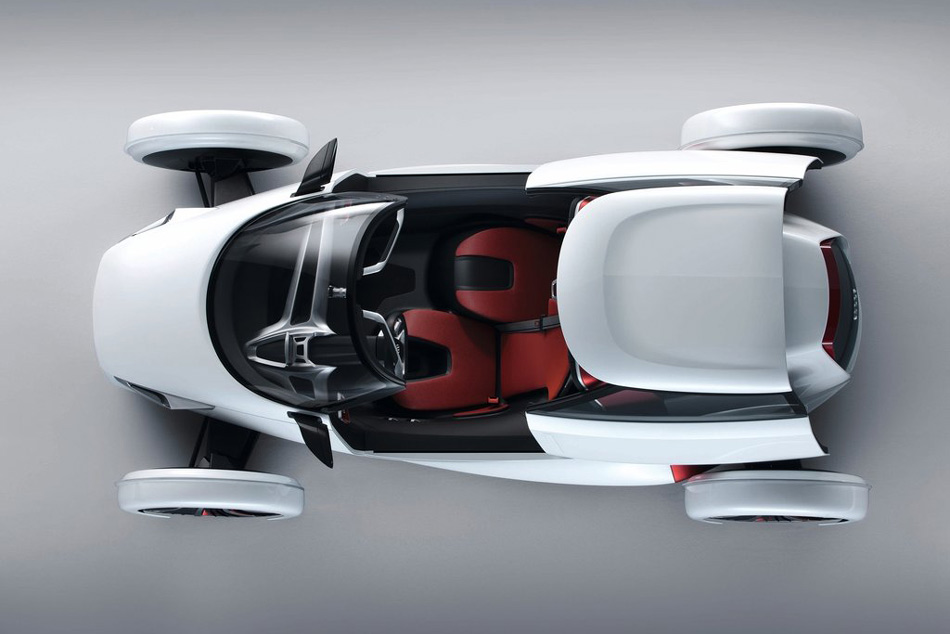
2011 Audi Urban Concept
Audi is a German company known for its innovations and
technological advances in the field of vehicle manufacturing. As part of the
Volkswagen group, Audi is responsible for various vehicle models such as cross
over SUV’s and compact cars. As such, the company always makes it a point to
set the standards and break the limits of the automobile world. Exterior & Interior
The Audi Urban concept is the brand’s attempt at designing the future look of urban vehicles. Moreover, this concept creatively combines the features of sports cars and recreational vehicles into one distinctive design. The Audi Urban is not based from any previous model and creates an entire class of its own.
Featuring a sleek body, the Audi Urban will have freestanding wheels that are adorned with protective plates with strips of LED lights. Inside, the Audi Urban is designed to fit two people with their position in a slightly staggered low level. Moreover, the driver will have the option of adjusting the steering wheel and foot pedals for personal preference.
The cockpit of the Audi Urban is made out of carbon fiber reinforced polymer that efficiently integrates the undercarriage of the seats in the car. With a 21-inch diameter wheelbase, the ultra-lightweight construction efficiently showcases the technological capabilities of Audi.
Power
As for the Audi Urban’s under-the-hood specs, there are 2 e-tron electric motors that provide the needed propulsion that allows the vehicle to quickly accelerate. Moreover, a lithium-ion battery will supply the needed electrical charges needed for casual city driving.
Exterior & InteriorThe Audi Urban concept is the brand’s attempt at designing the future look of urban vehicles. Moreover, this concept creatively combines the features of sports cars and recreational vehicles into one distinctive design. The Audi Urban is not based from any previous model and creates an entire class of its own.
Featuring a sleek body, the Audi Urban will have freestanding wheels that are adorned with protective plates with strips of LED lights. Inside, the Audi Urban is designed to fit two people with their position in a slightly staggered low level. Moreover, the driver will have the option of adjusting the steering wheel and foot pedals for personal preference.
The cockpit of the Audi Urban is made out of carbon fiber reinforced polymer that efficiently integrates the undercarriage of the seats in the car. With a 21-inch diameter wheelbase, the ultra-lightweight construction efficiently showcases the technological capabilities of Audi.
Power
As for the Audi Urban’s under-the-hood specs, there are 2 e-tron electric motors that provide the needed propulsion that allows the vehicle to quickly accelerate. Moreover, a lithium-ion battery will supply the needed electrical charges needed for casual city driving.
Specifications
General
Info
|
|
Vehicle Type: Concept
|
Est. Base Price: £ 8,800.00
|
Dimensions
|
|
Length: 120 in.
(304.8 cm)
|
Width: 67
in. (170 cm)
|
Weight: 1100 lbs
(499 kg)
|
Maximum Seating: 2 people
|
Performance
|
|
Engine: 2 Electric
Motors
|
Power: 7.1
kWh Li Ion Battery
|
Horsepower: 40 HP
|
Torque: 71
lb-ft
|
Transmission: Push
Button Automatic
|
0-40 mph: 6.5
seconds
|


2011 Citroen Tubik Concept
The 2011 Citroen Tubik Concept is a concept car
that was created for the purpose of making travelling on the road as
pleasurable as possible. It is geared towards making the driving dynamics of a
car as fun and meaningful as possible. When taking a look at how the Tubik
Concept car looks, it seems like a very stylish and chic automobile. Clearly
with this much sophistication in one automobile, it is quite clear cut how much
French influence has rubbed off on it. Some claim that this design is a modern
take on a classic.
Stylish
Upon taking a closer look on the aesthetics of the car, the asymmetrical entry points for passengers are quite astounding. The interiors and the lighting within the car are also equally impeccable. One thing sticks out with the design which is the lack of windows that for some is quite alarming since people are used to having windows on their vehicle doors. There have been some speculations with regards to the concept of no windows. Some claim that the driver would be able to view the exterior through cameras and screens installed within the vehicle. When
inspecting the car including its interior, it is without a doubt a concept car
for the future. With all the futuristic designs incorporated into the vehicle,
it surely has raised a lot of queries. As of now, no specific details have been
released with regards to this concept car. But one thing is definitely certain:
the 2011 Citroen Tubik Concept is definitely something to wait for.
When
inspecting the car including its interior, it is without a doubt a concept car
for the future. With all the futuristic designs incorporated into the vehicle,
it surely has raised a lot of queries. As of now, no specific details have been
released with regards to this concept car. But one thing is definitely certain:
the 2011 Citroen Tubik Concept is definitely something to wait for.
Stylish
Upon taking a closer look on the aesthetics of the car, the asymmetrical entry points for passengers are quite astounding. The interiors and the lighting within the car are also equally impeccable. One thing sticks out with the design which is the lack of windows that for some is quite alarming since people are used to having windows on their vehicle doors. There have been some speculations with regards to the concept of no windows. Some claim that the driver would be able to view the exterior through cameras and screens installed within the vehicle.
When
inspecting the car including its interior, it is without a doubt a concept car
for the future. With all the futuristic designs incorporated into the vehicle,
it surely has raised a lot of queries. As of now, no specific details have been
released with regards to this concept car. But one thing is definitely certain:
the 2011 Citroen Tubik Concept is definitely something to wait for.
Specifications
General
Info
|
|
Vehicle Type: Van
Concept
|
Base Price: NA
|
Dimensions
|
|
Length: 189 in.
(480 cm)
|
Wheel Base: NA
|
Height: 80.7 in.
(205
cm)
|
Width: 81.8 in.
(208 cm)
|
Performance
|
|
Engine: Hybrid4
|
Seating: up
to 9 people
|


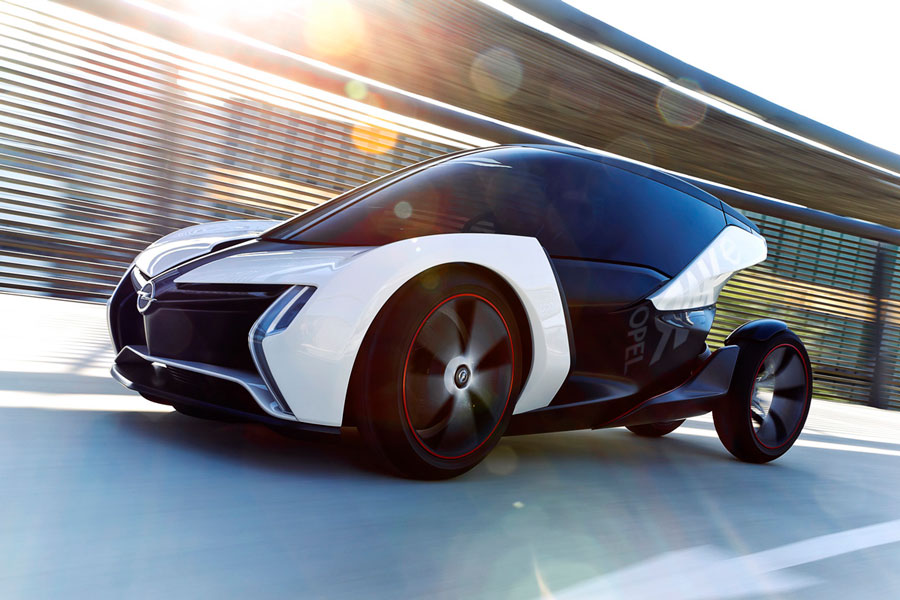
2011 Opel RAK e Concept
On paper, electric vehicles should have been the future of the
automotive world. As a practice, it seems that before that happens; technology
in producing these cars must improve before this potential gets realized. With
concept cars such as the 2011 Opel RAK e Concept, it shows that the
electric vehicle has a bright future.
The RAK e is an electric prototype that aims to make electric vehicles affordable for everyone. The name RAK is of historic significance for Opel, as the RAK is a rocket powered car that reached 220 kilometers per hour in the year 1928. The RAK e is just as revolutionary, as it aims to become another groundbreaking vehicle.
Performance Motor
The RAK e is unlike just about any car on the market today, electric powered or otherwise. It promises to take you a distance of 100 kilometers for a cost of just one euro, reach a speed of 120 kilometers per hour within 13 seconds, and to make the car so affordable that just about anyone can afford it. Its size is about a third of a conventional compact car, but despite its light weight inherent from its size and its space frame structure, it is still a very safe place to be.
This car can seat 2 people in an arrangement that resembles a glider. The engine is an electric motor with a maximum power output of 49 horsepower. Coupled with a 5 kWh battery, it can cover a range of up to a hundred kilometers.
The Opel RAK e Concept looks like a viable concept. If ever this car (or something similar to this) comes out in the future, this will make a serious dent in the automotive market for years to come.
The RAK e is an electric prototype that aims to make electric vehicles affordable for everyone. The name RAK is of historic significance for Opel, as the RAK is a rocket powered car that reached 220 kilometers per hour in the year 1928. The RAK e is just as revolutionary, as it aims to become another groundbreaking vehicle.
Performance Motor
The RAK e is unlike just about any car on the market today, electric powered or otherwise. It promises to take you a distance of 100 kilometers for a cost of just one euro, reach a speed of 120 kilometers per hour within 13 seconds, and to make the car so affordable that just about anyone can afford it. Its size is about a third of a conventional compact car, but despite its light weight inherent from its size and its space frame structure, it is still a very safe place to be.
This car can seat 2 people in an arrangement that resembles a glider. The engine is an electric motor with a maximum power output of 49 horsepower. Coupled with a 5 kWh battery, it can cover a range of up to a hundred kilometers.
The Opel RAK e Concept looks like a viable concept. If ever this car (or something similar to this) comes out in the future, this will make a serious dent in the automotive market for years to come.
Specifications
Dimensions
|
|
Length: 46.8 in.
(119 cm)
|
Curb Weight: 836 lbs
(379 kg)
|
Luggage Capacity: NA
|
Maximum Seating: 1+1
|
Performance
|
|
Motor: Electric
36.5 kW
|
Horsepower: 49 HP
|
Torque: 43 lb-ft
|
0-60 mph: 13 seconds
|

Mercedes-Benz Aria Concept Design
The Mercedes-Benz Aria Concept Design by Slavche
Tanevski is a concept car for the future, in 2030 to be exact. A luxury car
with a strong personality beautifully sculpted with sleek and sexy design and
with timeless beauty in mind.
The exterior front design is inspired by Alexander’s helmet, which is a symbol of power and authority, and still enables to incorporate the traditional front grill of the Mercedes-Benz. From the side; the body is elongated and it looks as if the wind has carve off the excess lining, making the car flow better against the wind.
The interior is a four-seater capacity, with a gull-wing like door that opens upward. The wheels have five spoke that is nicely done. Slavche Tanevski gave the Aria a nice elegant and finesse stance from the bottom up. The car has the illusion of light weightiness and feels like its floating on air. The
suspension system seems sturdy and comfortable. The wheel itself looks massive
that will easily grip the ground. When driving, you can feel the sensation of
flying, instead of driving on the road. 5 distinctive materials are
incorporated in the design, aluminum and copper for robustness, fine leather
for side panels and seats, and wood flooring for a luxurious look.
The
suspension system seems sturdy and comfortable. The wheel itself looks massive
that will easily grip the ground. When driving, you can feel the sensation of
flying, instead of driving on the road. 5 distinctive materials are
incorporated in the design, aluminum and copper for robustness, fine leather
for side panels and seats, and wood flooring for a luxurious look.
The exterior front design is inspired by Alexander’s helmet, which is a symbol of power and authority, and still enables to incorporate the traditional front grill of the Mercedes-Benz. From the side; the body is elongated and it looks as if the wind has carve off the excess lining, making the car flow better against the wind.
The interior is a four-seater capacity, with a gull-wing like door that opens upward. The wheels have five spoke that is nicely done. Slavche Tanevski gave the Aria a nice elegant and finesse stance from the bottom up. The car has the illusion of light weightiness and feels like its floating on air.
The
suspension system seems sturdy and comfortable. The wheel itself looks massive
that will easily grip the ground. When driving, you can feel the sensation of
flying, instead of driving on the road. 5 distinctive materials are
incorporated in the design, aluminum and copper for robustness, fine leather
for side panels and seats, and wood flooring for a luxurious look.
2011 Volkswagen XL1 Concept
Just how energy efficient can tomorrow’s cars be? Volkswagen
answers this question with their new XL1. This hybrid vehicle has a fuel
consumption of 1L/100 kilometers making it the most fuel efficient hybrid
electric / internal combustion engine combination car.
The XL1 may be highly energy efficient but its design still makes it practical for day to day use. The design is also aerodynamic and stylish. Standing at only 1,156mm tall, the XL1 is only as high as the Lamborghini Gallardo Spyder. The wing type doors give it a sportier look and still provides a large entry and exit space because they extend far into the roof.
One of the reasons why the XL1 is so fuel efficient is because it has a total weight of only 795kgs. The weight of the car is broken down as follows: 227kg for the entire drive unit; 153 kg for the running gear; 80 kg for the equipment; 105 kg for the electrical system and 230 kg for the body, wing doors and front wind screen.
The XL1 may be extremely fuel efficient, yet performance was not sacrificed. It can accelerate from 0 to 100 km/h in just 11.9 seconds and it has a top speed of 160 kmh. The Volkswagen XL1 is indeed the most efficient car in the world.
The XL1 may be highly energy efficient but its design still makes it practical for day to day use. The design is also aerodynamic and stylish. Standing at only 1,156mm tall, the XL1 is only as high as the Lamborghini Gallardo Spyder. The wing type doors give it a sportier look and still provides a large entry and exit space because they extend far into the roof.
One of the reasons why the XL1 is so fuel efficient is because it has a total weight of only 795kgs. The weight of the car is broken down as follows: 227kg for the entire drive unit; 153 kg for the running gear; 80 kg for the equipment; 105 kg for the electrical system and 230 kg for the body, wing doors and front wind screen.
The XL1 may be extremely fuel efficient, yet performance was not sacrificed. It can accelerate from 0 to 100 km/h in just 11.9 seconds and it has a top speed of 160 kmh. The Volkswagen XL1 is indeed the most efficient car in the world.

2010 T2 Concept by Idries Noah
The 2010 T2 concept by the South African based Idries Noah aims
to embody that green, and being green conscious, is the new black of the
automobile industry. The concept focuses on turning the Idries Noah T2 into the
fastest environment friendly sports car. It has a 3.5 liter V6 engine with two
electric motors that deliver up to 350 KW of power and is able accelerate to
100 km/hr in four seconds and a sleek design concept that is still up for
development to maximize aerodynamic performance of the car.
The whole project is in fact still under development, and while prospective buyers are doubtful that the car can really achieve speed benchmark it claims, Idries Noah is hopeful to make the perfect hybrid of a speedy sports car and an electronic engine that will be one of the best in the market of the environment conscious consumers.
The whole project is in fact still under development, and while prospective buyers are doubtful that the car can really achieve speed benchmark it claims, Idries Noah is hopeful to make the perfect hybrid of a speedy sports car and an electronic engine that will be one of the best in the market of the environment conscious consumers.
2010 Jaguar C-X75 Concept
 The
celebration of the historical 75 years of Jaguar and a glimpse at what the
future holds for the automotive industry have lead to the birth of Jaguar
C-X75. The design is patterned after a more poignant language harmonized with
modern fashion with the use of outstanding technology and research. It boasts
of its use of lightweight and recycled metals like aluminum, making the car
weight-saving and environment-conscious. Its form and design speak for its
highly efficient aerodynamics, the key to its acceleration up to 100 km/h
within 3.4 seconds.
The
celebration of the historical 75 years of Jaguar and a glimpse at what the
future holds for the automotive industry have lead to the birth of Jaguar
C-X75. The design is patterned after a more poignant language harmonized with
modern fashion with the use of outstanding technology and research. It boasts
of its use of lightweight and recycled metals like aluminum, making the car
weight-saving and environment-conscious. Its form and design speak for its
highly efficient aerodynamics, the key to its acceleration up to 100 km/h
within 3.4 seconds. The C-X75
also caters what is comfortable to the driver through its electronically
adjustable instrument binnacle, steering wheel and pedal box. This four-wheel
drive car can also run for a 110-kilometer distance without emissions through
the six hours-charged Lithium-ion batteries. The C-X75 is capable of producing
immense amounts of grips and down-force because of its sleekness and
compactness brought about by an underbody by Venturi and exhaust gas control.
The C-X75
also caters what is comfortable to the driver through its electronically
adjustable instrument binnacle, steering wheel and pedal box. This four-wheel
drive car can also run for a 110-kilometer distance without emissions through
the six hours-charged Lithium-ion batteries. The C-X75 is capable of producing
immense amounts of grips and down-force because of its sleekness and
compactness brought about by an underbody by Venturi and exhaust gas control.
2010 Audi Quattro Concept
Audi’s Quattro is the epitome of perfectly combined qualities of a
champion motor sport car. By simply looking at the appearance of the Audi
Quattro concept—hefty, solid and dominant—it already reveals the capabilities
and potential it hides inside. With a record of 183-kilogram weight, a 300 kW,
five-cylinder turbocharged engine, and the newest Quattro’s permanent all-wheel
drive system, this Audi Quattro represents the systematic evolution of
technology in manufacturing, which is the foundation of future Quattro coupés.
One of its distinguishing features is the self-locking crown-gear center differential that is light and compact, and it has a wide range of torque distribution between the rear and front wheels. Also, it does not only use ASF-assembled aluminum but also lightweight and high-strength carbon that is used in hood and bumpers. The conventional MMI central display has also been changed completely to a digital instrument cluster, resulting in a more condensed and a cleaner-looking interior.
One of its distinguishing features is the self-locking crown-gear center differential that is light and compact, and it has a wide range of torque distribution between the rear and front wheels. Also, it does not only use ASF-assembled aluminum but also lightweight and high-strength carbon that is used in hood and bumpers. The conventional MMI central display has also been changed completely to a digital instrument cluster, resulting in a more condensed and a cleaner-looking interior.
2010 Morgan EvaGT Concept
Inspired by the 1950's British sports saloons, the Morgan Motor
Company introduces a new concept for its coupe, a four-seater. The new 2010
Morgan EvaGT Concept is like the World War II era's Bristol 400 series as well
as the Frazer Nash BMW 328. The design of such sports cars carries a long front
end, which can be seen in most movie sets in the 40s and 50s. The 2010 Morgan EvaGT Concept has a modern, aerodynamic design. It combines the
style of a classic Brit sports car with the sporty and futuristic motif; like a
future blast from the past. As for speed, this stylish coupe is a 5-second car.
The 2010 Morgan EvaGT Concept comes in a 3.0L twin-turbo BMW straight-six with
direct injection; it has 300 horsepower and 250 pound-feet of torque.
Transmission comes in six-speed manual or six-speed automatic. As for the
speed, this coupe can achieve 4.5 seconds from 0-62mph with a top speed of
170mph.
The 2010 Morgan EvaGT Concept has a modern, aerodynamic design. It combines the
style of a classic Brit sports car with the sporty and futuristic motif; like a
future blast from the past. As for speed, this stylish coupe is a 5-second car.
The 2010 Morgan EvaGT Concept comes in a 3.0L twin-turbo BMW straight-six with
direct injection; it has 300 horsepower and 250 pound-feet of torque.
Transmission comes in six-speed manual or six-speed automatic. As for the
speed, this coupe can achieve 4.5 seconds from 0-62mph with a top speed of
170mph.
The 2010 Morgan EvaGT Concept has a modern, aerodynamic design. It combines the
style of a classic Brit sports car with the sporty and futuristic motif; like a
future blast from the past. As for speed, this stylish coupe is a 5-second car.
The 2010 Morgan EvaGT Concept comes in a 3.0L twin-turbo BMW straight-six with
direct injection; it has 300 horsepower and 250 pound-feet of torque.
Transmission comes in six-speed manual or six-speed automatic. As for the
speed, this coupe can achieve 4.5 seconds from 0-62mph with a top speed of
170mph.
2010 Peugeot EX1 Concept
 Dubbed as
a car of the future, the 2010 Peugeot EX1 is completely powered by electricity.
With a mishmash of modern artistry and original style, the EX1 is designed to
provide powerful driving impressions to celebrate the 200 years of adventure of
Peugeot. The design of EX1 is based on the concept of a water droplet, having
the rear section constructed closely to the rear wheels. This shape enables the
reduction of the passenger compartment. And adding the fact that it is
manufactured from carbon/honeycomb composite, a more favorable distribution of
weight is observed.
Dubbed as
a car of the future, the 2010 Peugeot EX1 is completely powered by electricity.
With a mishmash of modern artistry and original style, the EX1 is designed to
provide powerful driving impressions to celebrate the 200 years of adventure of
Peugeot. The design of EX1 is based on the concept of a water droplet, having
the rear section constructed closely to the rear wheels. This shape enables the
reduction of the passenger compartment. And adding the fact that it is
manufactured from carbon/honeycomb composite, a more favorable distribution of
weight is observed.The source of power is electric motor, one on each axle with a maximum output of 125 kW and torque of 240 Nm. A sophisticated yet futuristic way of entering the vehicle is done through a reverse-opening door. The driving experience provides an opportunity to similarly handle an aircraft since there are two control handles. The design never compromises the performance. As a matter of fact, EX1 has broken six world acceleration records, one of which showed that it travelled a mile for only 41.09 seconds.

2010 Citroen Metropolis Concept
French automotive company Citroen has just revealed what it calls
Metropolis Concept. A luxury sedan, a sleek concept car, the 2010 Citroen
Metropolis Concept is a tribute to China's rapid development and economic
vitality. This concept car will show during the Shanghai, China World Fair,
running from May to October this year. The very sleek 2010 Citroen Metropolis Concept has an impressive dimension and
svelte curves; its body color, called 'Pearl Silk', varies under different
lighting conditions. Designing is an imposing blend of tight edges and smooth
wide surfaces. As for the concept car's engine, it is equipped with a hybrid
drive-train; it uses a 2.0L V6 petrol engine with a 7-speed and dual-clutch
electronic gearbox. At low speed, the 2010 Citroen Metropolis Concept runs with
its electric motor from 55bhp up to 95bhp. On steady speeds, the petrol engine
will run on 272bhp and 375Nm of torque; the electric and petrol motors can be
used both to offer optimum power output.
The very sleek 2010 Citroen Metropolis Concept has an impressive dimension and
svelte curves; its body color, called 'Pearl Silk', varies under different
lighting conditions. Designing is an imposing blend of tight edges and smooth
wide surfaces. As for the concept car's engine, it is equipped with a hybrid
drive-train; it uses a 2.0L V6 petrol engine with a 7-speed and dual-clutch
electronic gearbox. At low speed, the 2010 Citroen Metropolis Concept runs with
its electric motor from 55bhp up to 95bhp. On steady speeds, the petrol engine
will run on 272bhp and 375Nm of torque; the electric and petrol motors can be
used both to offer optimum power output.
The very sleek 2010 Citroen Metropolis Concept has an impressive dimension and
svelte curves; its body color, called 'Pearl Silk', varies under different
lighting conditions. Designing is an imposing blend of tight edges and smooth
wide surfaces. As for the concept car's engine, it is equipped with a hybrid
drive-train; it uses a 2.0L V6 petrol engine with a 7-speed and dual-clutch
electronic gearbox. At low speed, the 2010 Citroen Metropolis Concept runs with
its electric motor from 55bhp up to 95bhp. On steady speeds, the petrol engine
will run on 272bhp and 375Nm of torque; the electric and petrol motors can be
used both to offer optimum power output.
2010 Bertone Alfa Romeo Pandion Concept
To
commemorate Alfa Romeo’s one-hundredth year anniversary, Bertone returned to
the international scene to unveil a concept car: the magnificent Pandion. This
beautiful, yet aggressive, coupe is the first car produced by Bertone’s new
Brand and Design Director, Mike Robinson. The inspiration behind the sports
car’s name and design is the Pandion haliaetus. This sea hawk, commonly known
as the Osprey, lives near the coast and preys on fishes. The 2010 Bertone Alfa Romeo Pandion Concept boasts of its unique ‘Skin and
Frame’ body design that perfectly blends elegance and technology together. The
‘skin’, which is the snake in the logo, represents the seductive and
magnificent form of this Italian masterpiece, while the ‘frame’, which refers
to the cross, represents the mechanical excellence of the car. Inspired by the
natural grace and strength of the Osprey’s wings, Mike Robinson and his team
designed the door to open in a striking manner, ending up in a perfect
90-degree above the rear-wheel of the coupe. The interior of this exreme sports
car is another sight to behold. The design of the two front chairs resembles
chaise-lounges that are incredibly thin and possess carbon fiber shells that
mimic the exterior of the car. The whole interior seems to be floating in
mid-air creating a ‘zero-gravity’ ambiance.
The 2010 Bertone Alfa Romeo Pandion Concept boasts of its unique ‘Skin and
Frame’ body design that perfectly blends elegance and technology together. The
‘skin’, which is the snake in the logo, represents the seductive and
magnificent form of this Italian masterpiece, while the ‘frame’, which refers
to the cross, represents the mechanical excellence of the car. Inspired by the
natural grace and strength of the Osprey’s wings, Mike Robinson and his team
designed the door to open in a striking manner, ending up in a perfect
90-degree above the rear-wheel of the coupe. The interior of this exreme sports
car is another sight to behold. The design of the two front chairs resembles
chaise-lounges that are incredibly thin and possess carbon fiber shells that
mimic the exterior of the car. The whole interior seems to be floating in
mid-air creating a ‘zero-gravity’ ambiance. Looking under the hood, the 2010 Bertone Alfa Romeo Pandion Concept is powered
by a 4.7-liter 450 CV 8-cylinder engine that delivers 444 horsepower.
Looking under the hood, the 2010 Bertone Alfa Romeo Pandion Concept is powered
by a 4.7-liter 450 CV 8-cylinder engine that delivers 444 horsepower.
The 2010 Bertone Alfa Romeo Pandion Concept boasts of its unique ‘Skin and
Frame’ body design that perfectly blends elegance and technology together. The
‘skin’, which is the snake in the logo, represents the seductive and
magnificent form of this Italian masterpiece, while the ‘frame’, which refers
to the cross, represents the mechanical excellence of the car. Inspired by the
natural grace and strength of the Osprey’s wings, Mike Robinson and his team
designed the door to open in a striking manner, ending up in a perfect
90-degree above the rear-wheel of the coupe. The interior of this exreme sports
car is another sight to behold. The design of the two front chairs resembles
chaise-lounges that are incredibly thin and possess carbon fiber shells that
mimic the exterior of the car. The whole interior seems to be floating in
mid-air creating a ‘zero-gravity’ ambiance.
Looking under the hood, the 2010 Bertone Alfa Romeo Pandion Concept is powered
by a 4.7-liter 450 CV 8-cylinder engine that delivers 444 horsepower.
LEXUS LF-Lc :-

The Lexus LF-Lc made its debut as just a lowly concept car at the
2012 North American International Auto Show (NAIAS) in Detroit, Michigan and
its reception was one that all automakers dream of. Not only did people at the
auto show love it, but Lexus customers were clamoring to see a production model
hit showroom floors.
Lexus all but told us that it would release a production model
loosely based on the concept, but no release dates were ever talked about.
According to a report from Automotive News, there are several Lexus
insiders that are claiming that there will be a model identical or at least
similar to the LF-LC and bearing the same name to hit showroom floors sometime
in the next two years.
With this news, we figured it was time to start piecing together a
review for our readers, so you can make an educated choice when the time comes.

As with most concept cars, do not expect it to roll into showrooms
looking exactly as it did in concept form. There are safety regulations in
place that could potentially limit the body styling, as well as cost
restraints. We do, however, expect the production model to closely resemble the
concept.

The basic profile of the car – long hood, shallow-raked windshield
and swooping roof line – will remain intact on the production model. The
largest change on the front end, from the concept, will likely be the pulling
forward of the headlights. The recessed headlights on the concept look cool,
but that causes a lot of extra aerodynamic drag. The front brake cooling inlet
will be reduced and more closed off than we see on the concept.
From the side, we expect the LF-LC to look just like the concept.
We anticipate seeing the wide hips, but we do expect the body line to be
slightly harder to keep up with the rest of the body and the trend going on in
this era.

The back end we expect to remain relatively untouched, with
exception of the recessed taillights. Those will likely be brought outward and
maybe slightly enlarges. The remainder of the back end fits perfectly with the
era and its potential competition.
Interior

The interior is a complete wild card, as the interior we saw in
Detroit was way too modern and way too expensive to go into any car in this
era. The overall swooping effect throughout the interior we certainly expect to
see in the production model but not the ultra-modern pedals, steering wheel, or
instrument cluster.

We do expect to see your standard array of awesome features. Some
of these features will include: navigation, automatic climate control, CD
player with iPod and Bluetooth connectivity, etc. We also anticipate the
retractable glass roof to make the trip to production with the LF-LC.
We’ll update you as soon as Lexus gives us some information on the
finalized interior for the LF-LC.
Engine and Drivetrain
Under the hood is a pretty large unknown on the LF-LC. We do know
that it will be a front engine, rear drive car with a gasoline engine and
electric motors working together to create peak power, a la the BMW i8 and
Acura NSX. We anticipate seeing a small 4-cylinder gasoline engine with a
turbocharger in the front and electric booster motors between the transmission
and engine.
To remain competitive, this model have to produce at minimum 350
horsepower, but Lexus can push it over 400 ponies and really corner the market.
With an advanced drivetrain like it will have, the LF-LC will
almost certainly come standard with a 7-speed dual-clutch transmission.
Once we get some confirmed information, we will get you a full
review on the engine and drivetrain.
Pricing

According to the rumors from Automotive News, the
LF-LC will run somewhere between $100,000 and $130,000. Given its awesome
styling and stout drivetrain, we think that is a pretty fair price range.
When can I get one?
According to the rumors floating around, the LF-LC is still at
least two years away, so you can put your deposit money back into the bank, for
now.

ford ranger raptor grill I admire this article for the well-researched content and excellent wording. I got so involved in this material that I couldn’t stop reading. I am impressed with your work and skill. Thank you so much.
ReplyDelete